

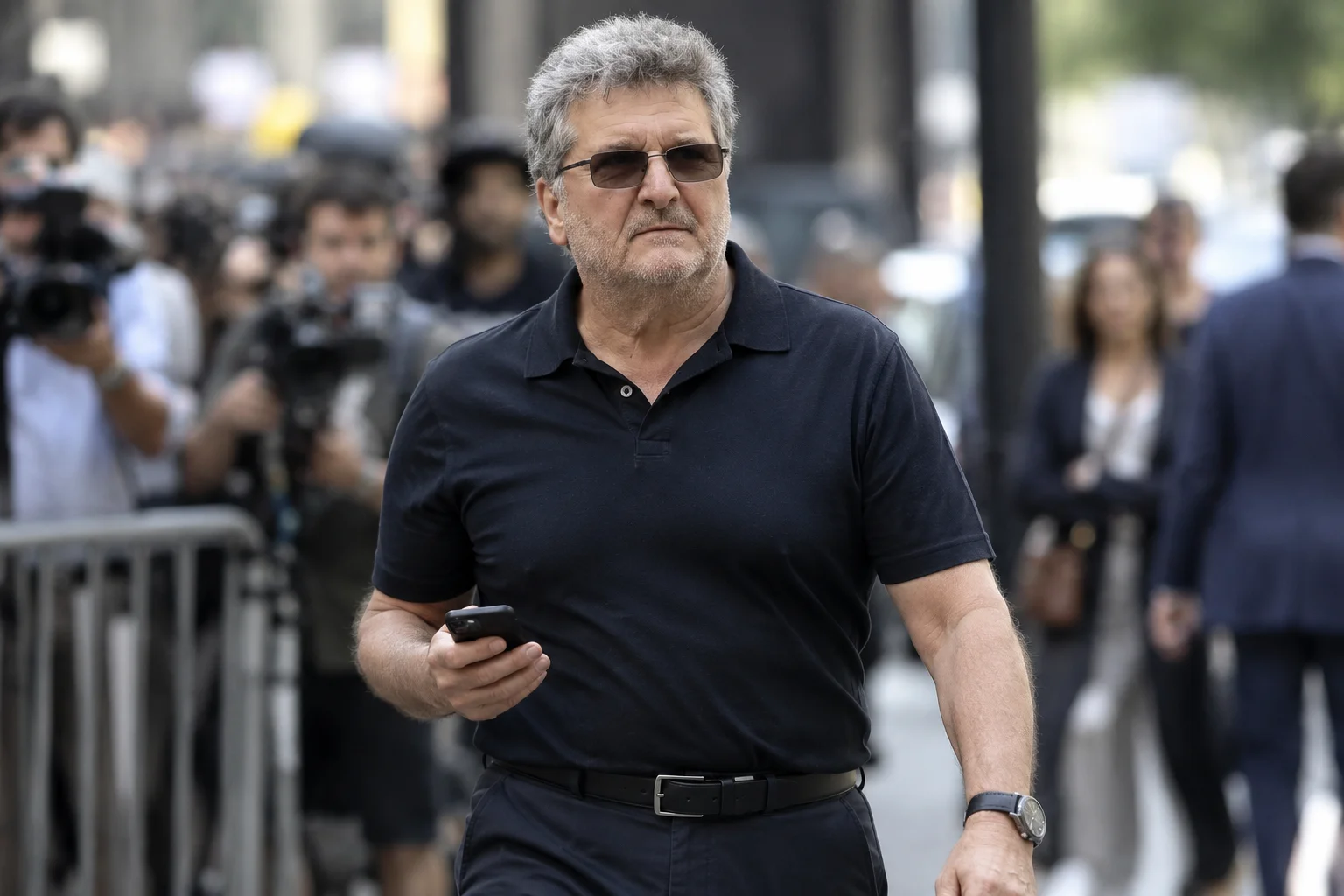
Who is Banksy? For more than three decades, the answer was one of the art world’s biggest mysteries. Banksy is a British street artist from Bristol, known for satirical stencils, political imagery, and stunts that mock governments, corporations, and the art market. After years of rumours, a 2026 Reuters investigation named him as Robin Gunningham. The artist has never confirmed it, and the name alone doesn’t explain why his work matters.
Biography Table
| Field | Details |
|---|---|
| Full Name | Robin Gunningham (as reported; never confirmed by the artist) |
| Nickname/Stage Name | Banksy; later legal name reportedly David Jones |
| Date of Birth | 28 July 1973 (reported; some sources give 1974) |
| Place of Birth | Bristol, England |
| Age | 53 (based on reported date of birth) |
| Nationality | British |
| Zodiac Sign | Leo (based on reported date of birth) |
| Profession/Occupation | Street artist, painter, political activist, film director |
| Years Active | Early 1990s – present |
| Education | Bristol Cathedral School (reported) |
| Genre/Field | Street art, graffiti, stencil art, satire, contemporary art |
| Notable Works | Girl with Balloon, Flower Thrower, Love is in the Bin, Dismaland, Walled Off Hotel |
| Awards/Honors | Webby Person of the Year (2014); Oscar nomination for Exit Through the Gift Shop |
| Social Media | Instagram (@banksy) |
Who Is Banksy the Artist?
Banksy is a pseudonym used by an anonymous British graffiti artist who became one of the most famous contemporary artists of the 21st century. His work shows up overnight on street walls, bridges, and buildings, usually as sharp stencils with a mix of humor, irony, and political undertones.
He began in the Bristol graffiti scene of the 1990s, then moved to London and built a global reputation. Today his murals appear everywhere from New York and Los Angeles to the West Bank, Gaza, and Ukraine. Few artists have turned a spray can into such a powerful tool for social commentary.
What makes Banksy unusual is the paradox at the center of his career. He is a household name, but the public has never officially seen his face. He is an icon of anti-establishment street culture, yet his canvas paintings sell for millions at auction. That tension is part of the art.
Having followed Banksy coverage for years, I think the mistake most people make is treating him only as a mystery to solve. His real skill is timing. He picks the right wall, the right moment, and the right symbol, so a simple image gets people talking worldwide within hours.
Who Is Banksy Really? The 2026 Reuters Investigation
The strongest answer to “who is Banksy really” came in March 2026. Reuters published an investigation claiming, beyond reasonable doubt, that Banksy is Robin Gunningham, a Bristol-born man who later took the name David Jones. It was the most detailed evidence yet on Banksy’s real identity.
The 2000 New York Arrest
The key piece of evidence was a court file from New York. In September 2000, police arrested a man for defacing a billboard advertisement on a Manhattan rooftop. The case file reportedly held a handwritten confession signed “Robin Gunningham.”
The charge was reduced to disorderly conduct. The man reportedly paid a small fine of $310 and did five days of community service. His bail paperwork listed a Manhattan hotel where Banksy was known to have painted rooms in the 1990s, which tied the name closely to the artist.
The investigation also said a 2019 photo in a book by Banksy’s former manager, Steve Lazarides, helped reporters find the rooftop and locate the police records. One old image, placed correctly on a map, opened up the whole paper trail.
The Ukraine Trail and the David Jones Name
The second strand came from Ukraine. In late 2022, Banksy confirmed on Instagram that he had painted murals in war-damaged towns, including Horenka near Kyiv. Reuters reporters spoke with locals who had seen the artist at work and compared that with travel and immigration records.
According to the report, Gunningham changed his legal name to David Jones around 2008, one of the most common names in Britain. This reportedly followed the Mail on Sunday’s 2008 exposé, and it stopped researchers from tracking his movements under his birth name for years.
Robert Del Naja of Massive Attack was also in Ukraine at the time. Reuters said he travelled with another man, whom they identified as Banksy. For fans of the Del Naja theory, this was a twist. The two appear to be close collaborators, not the same person.
How Banksy’s Team Responded
Banksy’s long-time lawyer, Mark Stephens, did not confirm or deny the findings. He said the artist does not accept that many details in the enquiry are correct. He also warned that publishing would violate the artist’s privacy, interfere with his work, and put him in danger.
That response fits the pattern of the past 20 years. Banksy’s team has never issued a clear denial of the Gunningham name. Instead, they argue that anonymity serves the work. So even after Reuters, the official position stays unresolved.
The Earlier Evidence That Pointed to Robin Gunningham
Reuters did not come out of nowhere. The Gunningham theory had been building since 2008, supported by journalism, science, and an old audio clip. Each piece added probability, but none offered final proof until the New York records surfaced.
The 2008 Mail on Sunday Report
In 2008, The Mail on Sunday published a photo of a man in Jamaica with a spray can and named him Robin Gunningham. Reporters spoke with former schoolmates and traced him to Bristol Cathedral School, a private school. They reported his date of birth as 28 July.
The paper also found that he had lived in Bristol and London, which matched Banksy’s known movements. Former classmates described a talented artist who drew all the time. For many readers, this was the first time the question of Banksy’s real name had a believable answer.
The 2016 Geographic Profiling Study
In 2016, scientists at Queen Mary University of London tried a different method. They used geographic profiling, a technique normally used to find criminals’ likely bases, and ran it through a statistical tool called a Dirichlet process mixture model.
The team mapped around 140 suspected Banksy artworks in London and Bristol. The hotspots on their geoprofile clustered around places tied to Gunningham, including a pub, a playing field, and residential addresses. It showed a strong correlation, though the researchers were clear it was not scientific proof.
Banksy’s legal team reportedly contacted the university about how the study would be publicised. For a lot of observers, that reaction said as much as the results did.
The Audio Clip and “Robbie”
In 2023, an old 2003 ITV interview by journalist Haig Gordon resurfaced. When Gordon asked whether his name was Robert Banks, the artist replied that it was “Robbie.” It was a small moment, but it fit neatly with the name Robin.
Here is how the main evidence stacks up:
| Year | Source | What It Suggested |
|---|---|---|
| 2003 | ITV interview (resurfaced 2023) | The artist answers to “Robbie” |
| 2008 | The Mail on Sunday | Named Robin Gunningham from Bristol |
| 2016 | Queen Mary University of London | Artwork locations cluster around Gunningham’s haunts |
| 2026 | Reuters | Signed confession from a 2000 New York arrest |
Other Banksy Identity Theories
Before Reuters, the Banksy identity debate had four main theories and several fringe ones. Most can now be seen as misdirection, rumour, or coincidence, but they still show how much curiosity the mystery created.
Robert Del Naja (3D of Massive Attack)
Robert “3D” Del Naja is a Bristol graffiti artist turned musician and a founding member of Massive Attack. In 2016, journalist Craig Williams noticed that Banksy murals often appeared in cities like Toronto, Boston, San Francisco, and Melbourne around the time Massive Attack was on tour.
The theory got a boost in 2017 when DJ Goldie, speaking on a podcast, referred to Banksy as “Rob.” Del Naja has said he is a friend of Banksy and not the artist himself. The Reuters findings suggest the tour logistics may be explained by close collaboration rather than shared identity.
Banksy Is a Collective
Some believe Banksy is a group of artists with one central figure. The volume of work supports this. Projects like the Better Out Than In New York residency in 2013, Dismaland in 2015, and the Walled Off Hotel in 2017 needed a team to pull off.
This theory probably holds some truth. Banksy clearly works with assistants and collaborators. But a team behind the scenes is different from Banksy being a collective with no single artist at the center.
Banksy Is a Woman
In 2014, Canadian media artist Chris Healey claimed Banksy was a team of seven artists led by a woman. Fans pointed to the many girls and female figures in Banksy’s work and to a blonde woman seen in some footage.
Male sightings over the years, plus the Reuters evidence, make this theory weak. Still, it shows how the public projects its own ideas onto an invisible artist.
Jamie Hewlett and the Fringe Theories
Jamie Hewlett, co-creator of Gorillaz, was named in a 2018 theory based on company paperwork linked to Banksy’s business entities. Other theories are even thinner:
- Neil Buchanan: The Art Attack presenter was linked to Banksy in a 2020 social media hoax.
- Thierry Guetta (Mr. Brainwash): Some viewers of Exit Through the Gift Shop suspected the film was an elaborate prank starring Banksy himself.
- Shepard Fairey: Sometimes named online, though he is a well-known artist with his own public identity.
| Theory | Main Evidence | Strength Today |
|---|---|---|
| Robin Gunningham | Arrest records, geoprofiling, press reports | Strongest |
| Robert Del Naja | Massive Attack tour dates, Goldie’s slip | Likely collaborator |
| Collective | Scale of projects | Partly true (team support) |
| Woman-led team | Chris Healey’s claim | Weak |
| Jamie Hewlett / others | Paperwork, hoaxes | Weakest |
Has Anyone Seen Banksy’s Face?
Officially, no photo of Banksy’s face has ever been confirmed. People searching “who is Banksy face” usually find the 2008 Jamaica photo from The Mail on Sunday, but the artist has never acknowledged it.
A few journalists have met him in person. In 2003, Guardian journalist Simon Hattenstone described him as a white man around 28, dressed casually in jeans and a T-shirt, with a silver tooth, a silver chain, and an earring. He came across as friendly and relaxed, not like a mysterious outlaw.
In his own film appearances, Banksy is shown in a hood with his face blacked out and his voice altered. The Reuters investigation included photos of a man said to be him, but his team disputes the details. So his face remains unconfirmed in any official sense.
Why Banksy Stays Anonymous
The most practical reason is legal. Graffiti on public or private property counts as vandalism in the UK and many other countries. Painting illegally for years left Banksy open to arrest and prosecution, so a hidden identity was a shield.
Anonymity also protects the message. Banksy’s work is anti-establishment. If he became a normal celebrity with interviews and red carpets, he would become part of the system he mocks. Staying unclaimed keeps the rebel image intact.
There is a psychological side too. Ideas from Sigmund Freud and Anna Freud on projection help explain the effect. With no face attached, viewers fill the gap with their own meaning. The mystery makes the audience part of the story.
Finally, anonymity is good business. Banksy’s authentication body, Pest Control, sits between him and the market, so the artist never has to show up in public. The secrecy has become part of the structure of the brand.
Where Banksy Is From and How He Started
Banksy is from Bristol in south-west England, a city with a lively music and graffiti culture in the 1980s and 1990s. Bands like Massive Attack and Portishead came from the same scene, and that overlap between music and street art shaped his style.
In the early 1990s, he was part of the Bristol graffiti group DryBreadZ Crew, or DBZ, with artists Kato and Tes, roughly between 1992 and 1994. At that stage, he mostly did freehand spray painting, like most graffiti writers of the time.
He has said he switched to stencils after a close call with police. While hiding under a vehicle, he noticed its stencilled lettering and realised stencils were faster and cleaner. For an artist trying not to get caught, speed mattered more than anything.
By the early 2000s, he had moved to London, and his work started drawing wider attention. From there, his reputation spread to LA, New York, Bethlehem, and far beyond.
Banksy’s Technique and Influences
Banksy’s main technique is the stencil, an old method known in French as pochoir. He cuts intricate designs from paper, card, plastic, or metal sheets, then sprays paint through them. That lets him finish a detailed mural in minutes instead of hours.
His biggest influence is Blek le Rat, the French graffiti artist who began using stencils and rat imagery in Paris in the early 1980s. Banksy has openly credited him. You can see the link clearly in Banksy’s famous rats.
He also borrows from art history. He has reworked famous images like Vermeer’s Girl with a Pearl Earring as The Girl with the Pierced Eardrum, and nods to Picasso, Monet, and Van Gogh in his canvas work. In May 2005, he even hung a fake cave painting of a caveman pushing a shopping cart inside the British Museum.
What I find smart about his technique is the balance between detail and simplicity. The stencils are often photographic and life-like, yet the message reads in seconds. That works like communication guerrilla tactics: quick, clear, and hard to ignore.
Banksy’s Most Famous Works
Banksy’s most famous works mix simple imagery with strong political messages. Many started on the street and later reached auction houses like Sotheby’s and Phillips.
| Work | Year | Location | Why It Matters |
|---|---|---|---|
| Girl with Balloon | 2002 | London South Bank | Voted Britain’s favourite image in 2017 |
| Flower Thrower (Love is in the Air) | 2003–2005 | Jerusalem / West Bank | A masked man throwing flowers instead of a Molotov |
| Kissing Coppers | 2004 | Brighton | Two police officers kissing |
| West Bank barrier murals | 2005 | Israel-Palestine wall | Images of ladders, holes, and escape |
| Keep it Spotless | 2007 | Canvas | A cleaner lifting up a Damien Hirst-style spot painting |
| Love is in the Bin | 2018 | Sotheby’s London | Girl with Balloon, half-shredded at auction |
| Valentine’s Day Mascara | 2023 | Margate | A comment on domestic violence |
Girl with Balloon
Girl with Balloon shows a small girl reaching toward a red heart-shaped balloon. Its first version appeared on the South Bank in London around 2002. In a 2017 poll, it was voted Britain’s favourite artwork, beating centuries of classic paintings.
The image is often read as a symbol of hope, love, and loss. Near the stencil sits a phrase suggesting there is always hope. Its simplicity is what made it perfect for prints, posters, and, later, one of the most famous stunts in auction history.
Flower Thrower and the West Bank Works
Flower Thrower shows a masked protester ready to throw what looks like a bomb, but it’s a bunch of flowers. It turns an image of violence into one of peace. The piece is tied to his work in the Jerusalem and Bethlehem area.
In 2005, he painted a series of images on the West Bank barrier, including a girl floating up with balloons and children with buckets and spades by a painted hole in the wall. These works made his politics clear on an international stage.
Pieces That Target Brands and Power
Banksy often goes after corporations and brands. He has mocked Disney, McDonald’s, and Tesco, and in 2004 he made the “Di-faced Tenner,” a fake £10 note with Princess Diana’s face in place of the Queen. The British Museum later added it to its collection.
His Rat Collection of rats with cameras, placards, and umbrellas is another recurring theme. Rats represent the underclass: unwanted, everywhere, and able to survive anything. In many ways, they are the artist’s self-portrait.
The Shredding: Love Is in the Bin
The most famous Banksy stunt happened at Sotheby’s London in October 2018. A framed Girl with Balloon sold for just over £1 million. Seconds after the hammer fell, a hidden shredder in the frame sliced the canvas halfway through.
Banksy later posted a video on Instagram showing he had built the shredder into the frame years earlier. He quoted Picasso’s idea that the urge to destroy is also a creative urge. The stunt was a direct criticism of the art world and its sky-high prices.
The irony is that the destruction made the work more valuable. Renamed Love is in the Bin, it resold in 2021 for around £18.6 million. In trying to attack the market, Banksy gave it one of its biggest headlines, and that contradiction is very on-brand for him.
Banksy Timeline
Here are the key moments in Banksy’s career, from Bristol walls to global shows:
| Year | Event |
|---|---|
| Early 1990s | Starts painting in Bristol with DryBreadZ Crew |
| 1998 | Organises an early graffiti event in Bristol |
| 2002 | First show in LA; Girl with Balloon appears in London |
| 2003 | Turf War exhibition in London, with painted live animals |
| 2005 | West Bank murals; fake cave painting in the British Museum |
| 2006 | Barely Legal show in LA, with a painted elephant |
| 2008 | Cans Festival in London; Mail on Sunday names Gunningham |
| 2009 | Banksy versus Bristol Museum exhibition |
| 2010 | Exit Through the Gift Shop released; later Oscar-nominated |
| 2013 | Better Out Than In month-long residency in New York |
| 2015 | Dismaland opens in Weston-super-Mare |
| 2017 | Walled Off Hotel opens in Bethlehem |
| 2018 | Girl with Balloon shredded at Sotheby’s |
| 2020 | Funds the Louise Michel migrant rescue boat |
| 2022 | Paints murals in war-hit towns in Ukraine |
| 2024 | Animal series across London, ending at London Zoo |
| 2026 | Reuters names him as Robin Gunningham |
What Is Banksy’s Message?
Banksy’s message is anti-capitalist, anti-war, and pro-freedom. His work criticises consumer society, police brutality, inequality, racism, and the power of governments and big corporations. He tends to side with the underdog, whether that’s refugees, protesters, or animals.
He often uses humor to deliver hard truths. A soldier being searched by a child, or a chimpanzee in a parliament, makes you smile first and think second. That irreverent tone helps his political commentary reach people who would never read a policy article.
His recent themes include climate change, Brexit, and the wars in Gaza and Ukraine. In 2019, his painting Devolved Parliament, showing chimpanzees in the House of Commons, felt like a direct comment on Brexit-era politics.
What stands out to me is how he treats location as part of the message. A mural in Bethlehem means something different from the same image in London. The place, the timing, and the audience all do half the work.
Banksy as Activist and Philanthropist
Banksy puts real money behind his causes. In 2020, he funded the Louise Michel, a pink rescue boat that picks up migrants in the Mediterranean Sea. He has also created works for Greenpeace, the Campaign Against Arms Trade, and Reprieve.
Some of his most notable charity moments include:
- Mobile Lovers (2014): Painted near a struggling Bristol youth club, which sold the piece for £403,000 to stay open.
- Game Changer (2020–2021): Given to a Southampton hospital, showing a boy playing with a nurse doll. It sold for about £14.4 million for NHS-related charities in March 2021.
- Walled Off Hotel (2017): A hotel in Bethlehem facing the separation wall, built to draw attention to life in the West Bank.
- Mediterranean Sea View (2017): Three paintings sold to raise £2.2 million for a Bethlehem hospital.
He has also backed homelessness charities in Bristol and supported relief projects linked to Ukraine. This side of his career gives weight to his message. He isn’t just commenting on problems; he’s paying for fixes.
How Banksy Makes Money and His Net Worth
Banksy’s street art is free to see, but he earns from other channels. His main income comes from limited-edition prints, original canvas paintings, sculptures, books, and film. Early prints were sold through Picturesonwalls, and later sales run through Pest Control.
He has published books like Wall and Piece and several self-published titles. His film Exit Through the Gift Shop was a critical hit and earned an Oscar nomination for Best Documentary Feature.
There is no verified figure for Banksy’s net worth. Popular estimates often land around $50 million, but these are guesses. He doesn’t profit directly when others sell his street works, and he gives a large share of his proceeds to charity.
What Is the Banksy Pest Control Office?
Pest Control Office is the official authentication body for Banksy’s work. It issues a Certificate of Authenticity for genuine prints and originals. Without that certificate, a Banksy piece is very hard to sell through a legit source.
Pest Control does not authenticate street works, because Banksy doesn’t want them removed and sold. It also serves as a buffer between the artist and the public. Any statement about a new work usually comes through Banksy’s Instagram or this office.
Does Banksy’s Identity Really Matter?
In a meaningful sense, knowing Banksy’s name changes very little about the art. Girl with Balloon reads the same whether you believe in the Gunningham theory or not. The impact comes from the image, its place, and its message.
That said, the identity debate has shaped how people see him. The mystery built the myth, and the myth helped the brand. If the Reuters findings become widely accepted, Banksy may lose some aura, but his body of work is already secure in history.
My honest take: the Reuters evidence is very strong, and it also shows Banksy works with others, including friends like Del Naja. So the answer is probably both. One man, Robin Gunningham, sits at the center, supported by a trusted team.
Frequently Asked Questions
Is Banksy’s Real Name Confirmed?
Not officially. Reuters, The Mail on Sunday, and a 2016 scientific study all point to Robin Gunningham, but Banksy himself has never publicly confirmed his real identity. His lawyer has disputed many details without offering an alternative name.
Is Banksy a Man or a Woman?
The evidence strongly suggests Banksy is a man. Journalists who met him described a man, and the documents in the Reuters investigation relate to a male artist from Bristol. Claims that Banksy is a woman-led team have never been backed by solid proof.
How Much Is a Banksy Artwork Worth?
Prices vary widely. Signed prints can sell for tens of thousands of pounds, while major originals have sold for millions. Love is in the Bin reached about £18.6 million in 2021, one of the highest prices ever paid for a Banksy.
Is It Legal to Remove and Sell Banksy’s Street Art?
It sits in a legal gray area. In general, a mural belongs to the owner of the property it’s painted on, so they may remove it. However, Pest Control won’t authenticate street pieces, and there have been legal disputes between dealers, property owners, and preservationists.
Does Banksy Have Social Media?
Yes. Banksy uses Instagram (@banksy) to confirm new works and share videos of his projects. It’s the most reliable way to check if a new mural is really his, since fakes and copycats appear often.
Is Banksy Still Active?
Yes. He remains active well into the 2020s, with new murals appearing in the UK and abroad. His work continues to respond to current events, from wars and protests to debates over justice and freedom.
Read About : billie eilish age