


Alice Walker is one of the most influential American writers of the last century. She is a novelist, poet, essayist, and lifelong activist whose work gave Black women’s voices a central place in the literary canon. From a sharecropper’s cabin in rural Georgia to the Pulitzer Prize for Fiction, her story links art and justice. Whether you came here for Alice Walker books, a quick Everyday Use summary, or the history behind The Color Purple, this guide covers her life and work in clear, connected detail.
Biography Table
| Field | Details |
|---|---|
| Full Name | Alice Malsenior Walker |
| Date of Birth | February 9, 1944 |
| Place of Birth | Eatonton, Georgia, USA |
| Age | 82 (as of 2026) |
| Nationality | American |
| Zodiac Sign | Aquarius |
| Ethnicity | African American |
| Profession/Occupation | Novelist, poet, essayist, short story writer, activist |
| Years Active | 1968–present |
| Education | Spelman College; B.A., Sarah Lawrence College (1965) |
| Genre/Field | Literary fiction, poetry, essays, womanist literature |
| Spouse/Partner | Melvyn Rosenman Leventhal (m. 1967; div. 1976) |
| Children | Rebecca Walker (born 1969) |
| Parents | Willie Lee Walker and Minnie Tallulah Grant Walker |
| Siblings | Seven older siblings (she was the eighth and last child) |
| Eye Color | Dark brown |
| Hair Color | Black/gray (locs) |
| Notable Works | The Color Purple, Meridian, In Search of Our Mothers’ Gardens, “Everyday Use” |
| Awards/Honors | Pulitzer Prize for Fiction (1983), National Book Award (1983), O. Henry Award, Lillian Smith Book Award |
Who Is Alice Walker?
Alice Walker is best known as the author of The Color Purple, the 1982 novel that made her the first African-American woman to win the Pulitzer Prize for Fiction. She also coined the term “womanist,” which remains a key idea in Black feminist thought.
Her output is wide. She has written 17 novels and story collections, 12 non-fiction works, and many poetry and essay collections. Her books have been translated into more than two dozen languages, which is rare for literary fiction focused on rural Southern Black life.
What sets her apart is how closely her writing and her social activism move together. She marched in the Civil Rights Movement, registered voters in the South, and later took up causes from animal advocacy to the Palestinian cause. For Walker, a story is never just a story. It is a way of telling people they know their worth.
Alice Walker’s Early Life and Childhood
Alice Walker was born on February 9, 1944, in Eatonton, a rural farming town in Georgia. Her parents, Willie Lee Walker and Minnie Tallulah Grant, were sharecroppers working cotton fields under the harsh rules of the Jim Crow South.
Her mother also worked as a maid and domestic worker to support eight children. Family history ran deep. Walker traced her roots to enslaved grandparents and a great-great-grandmother, Mary Poole, who was forced to walk from Virginia to Georgia carrying two children.
Money was tight, but her mother made sacrifices that shaped the future writer. She bought Alice a sewing machine, a suitcase, and a typewriter on a domestic worker’s wages. Walker later said these three gifts gave her self-sufficiency, freedom to travel, and permission to write.
Her mother also enrolled her in school at age four at East Putnam Consolidated. Early on, Alice was lively and talkative. Teachers noticed her quick mind, and her love of reading and writing started long before anyone saw her as a writer.
The BB Gun Injury That Changed Everything
At age eight, while playing cowboys and Indians, one of her brothers shot her in the right eye with a BB gun. The family had no car, so she did not reach a doctor for about a week. By then, she was permanently blind in that eye.
The scar tissue made her shy and ashamed. Other children teased her, and she began to withdraw into isolation. She stopped playing with others and spent long hours alone, writing poetry in solitude and watching people and herds of cows around the farm.
Six years later, at 14, a doctor removed the scar tissue. Her confidence came back, and she went on to become prom queen and class valedictorian. She wrote about this period in the essay “Beauty: When the Other Dancer Is the Self.” Many readers, myself included, see that essay as the best key to her empathy and her gift as a close observer of human relationships.
Education and Mentors
Walker graduated as valedictorian of Butler Baker High School in 1961, the only school for Black students in her area. She then went to Spelman College in Atlanta on a full state scholarship.
Her first bus trip to Atlanta was a lesson in segregation. She was made to sit at the back of the bus. That moment, along with the rising movement around her, pushed her to become politically active in her first year.
At Spelman, historian Howard Zinn and Staughton Lynd became important mentors. When Zinn was fired for supporting student activists, Walker left too. In 1964 she transferred to Sarah Lawrence College in Bronxville, New York, and earned her B.A. in 1965.
Sarah Lawrence gave her the freedom to write. A summer trip to East Africa in 1964 stirred new poems, and her work began appearing in the college journal. Those junior and senior years turned a gifted student into a working poet.
Civil Rights Activism and Early Career
For Walker, writing and civil rights were inseparable from the start. She attended the 1963 March on Washington, where she heard Martin Luther King Jr. speak. She had once watched his home in Georgia as a young student.
During college summers she registered Black voters in Liberty County, Georgia, and in Mississippi. She also worked with a Head Start program in Mississippi and attended the Youth World Peace Festival in Finland in 1962.
After college she took day jobs to support her writing. She worked at the New York City Department of Welfare, served as a file clerk and salesperson, and was a Black history consultant. She also worked with the NAACP Legal Defense Fund on voter and desegregation cases.
These years gave her the raw material for her fiction. The sharecroppers’ struggles, the risks of the movement, and the women she met in the South would show up again and again in her novels and stories.
Marriage, Family, and Personal Life
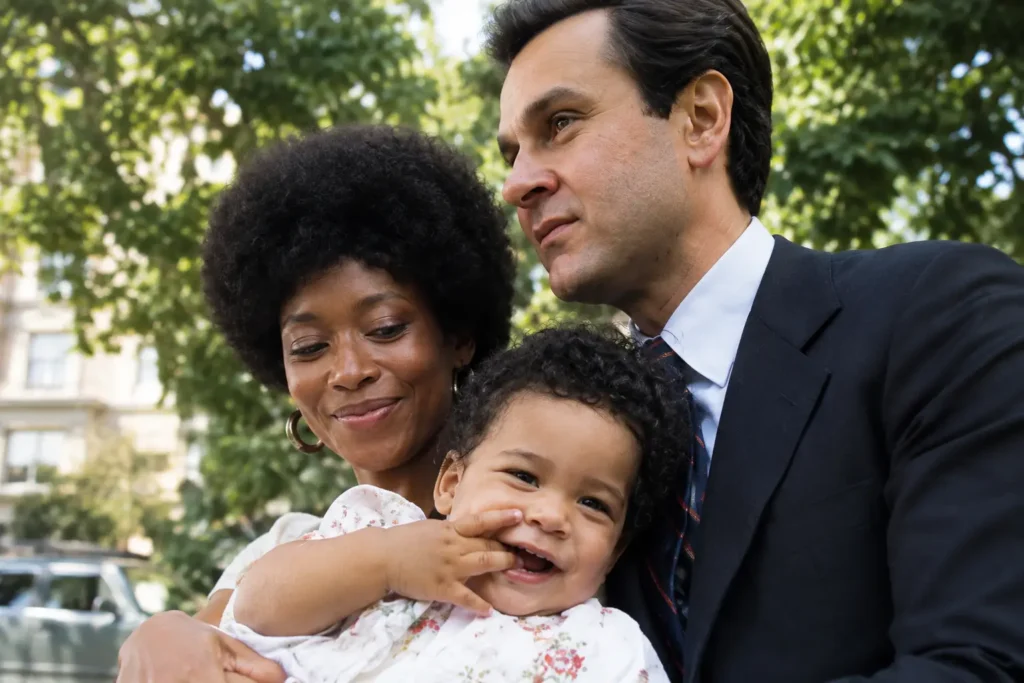
On March 17, 1967, Walker married Melvyn Rosenman Leventhal, a Jewish civil rights lawyer. They married in New York because interracial marriage was illegal in parts of the South at the time.
The couple then moved to Jackson, Mississippi, becoming the first legally married interracial couple in the state after anti-miscegenation laws were struck down. They were threatened and harassed by the Ku Klux Klan while Leventhal worked on school desegregation cases.
Their daughter, Rebecca Grant Leventhal (now Rebecca Walker), was born in 1969. The couple separated in the mid-1970s and divorced in 1976. Walker later moved to northern California, living near Mendocino.
In the late 1970s, she began a long relationship with Robert L. Allen, editor of The Black Scholar. In the mid-1990s she had a relationship with singer Tracy Chapman. She has spoken openly about her sexuality, which fits the honesty found across her work.
Alice Walker Books: The Novels at a Glance
Walker’s novels follow Black women through hardship, violence, and spiritual healing. Her first three are often read as an informal trilogy about inner Black life in the South.
| Year | Novel | Core Focus |
|---|---|---|
| 1970 | The Third Life of Grange Copeland | Three generations of a sharecropping family; violence and forgiveness |
| 1976 | Meridian | A young woman in the Civil Rights Movement; art and activism |
| 1982 | The Color Purple | Celie’s journey from abuse to self and voice |
| 1989 | The Temple of My Familiar | Myth, memory, and spiritual history across continents |
| 1992 | Possessing the Secret of Joy | Tashi’s life after FGM |
| 1998 | By the Light of My Father’s Smile | Sexuality, family, and the afterlife |
| 2004 | Now Is the Time to Open Your Heart | A woman’s spiritual journey through healing |
Meridian is still called one of the best civil rights novels ever written. It is also partly autobiographical, drawing on Walker’s own time in the South.
Some later novels drew harsh reviews. Critics called parts of them too preachy. Still, readers who follow her full body of work can see a steady theme: people breaking free from imposed powerlessness, whether that comes from racism, men’s sexism, or tradition.
The Color Purple by Alice Walker
The Color Purple by Alice Walker is her most famous book. It was published by Harcourt Brace in 1982 and quickly became a bestseller. It is now a fixture of African American women’s literature.
Plot and Themes
The novel follows Celie, a poor Black woman in segregated rural Georgia. It is an epistolary novel, written mostly as letters. Celie first writes letters to God because she has no one else to tell about her abuse.
Across about ninety letters, readers watch Celie find her self and voice. Her bond with Shug Avery, which becomes a lesbian relationship, helps her grow. Her sister Nettie’s letters from Africa add a wider view of family and faith.
The book deals with racism, sexism, sexuality, and gender. It shows how patriarchal Black culture and racist white culture both press down on Celie. Its lasting importance comes from its message that people can reform and heal. Even the near-villains, like Mister, change by the end.
Pulitzer Prize and Critical Reception
In 1983, The Color Purple won the Pulitzer Prize in Fiction. Walker became the first African-American woman to win that honor. Other finalists that year included Anne Tyler. The book also won the National Book Award.
Not every response was warm. Some critics accused the novel of male-bashing and said it showed Black men badly. Walker answered many of these points in her memoir The Same River Twice.
Many critics praised it as a jewel. They admired its honesty and its unique voice. Over time, the book became one of the most taught works in American classrooms, and it is often discussed as a full portrayal of African American life.
Film, Broadway, and Beyond
In 1985, Steven Spielberg directed a major film based on the book. Whoopi Goldberg played Celie, with Oprah Winfrey and Danny Glover in key roles. Quincy Jones co-produced and scored the film. It earned 11 Oscar nominations.
Walker wrote a screenplay draft, though it was not used. She was also battling Lyme disease during this period, which made the experience harder.
The story moved to the stage as a musical at Atlanta’s Alliance Theatre in 2004. It opened on Broadway in 2005 and ran for 910 performances. A revival and a new film adaptation followed, keeping Alice Walker’s The Color Purple in front of new generations.
Everyday Use by Alice Walker
“Everyday Use” by Alice Walker is her most widely taught short story. It first appeared in her 1973 collection In Love and Trouble. It is short, but it packs a big debate about heritage into one family visit.
Everyday Use by Alice Walker Summary
The story is told by Mama, a strong, practical woman in the rural South. She waits in the yard with her younger daughter, Maggie, for a visit from her older daughter, Dee. Maggie is shy and carries burn scars from a house fire years ago.
Dee arrives with a companion and a new name, Wangero Leewanika Kemanjo. She says she no longer wants a name that came from her oppressors. She takes photos of the house and asks for family items, like the butter churn top and dasher.
Then Dee asks for two quilts made by her grandmother and relatives. Mama had promised them to Maggie for her wedding. Dee argues Maggie would put them to “everyday use” and ruin them. Mama takes the quilts back and gives them to Maggie. Dee leaves angry, and Mama and Maggie sit quietly together until bedtime.
Themes and Symbolism in Everyday Use
The quilts are the heart of the story. For Dee, they are art to hang on a wall. For Maggie, they are living memory. She learned to quilt from her grandmother, so the heritage is part of her hands, not just her eyes.
The story questions a kind of heritage that treats culture as a trend. Dee embraces African names and styles but looks down on the family that actually lived that history. Walker shows real respect for the quilting heritage of Black Southern women.
When I teach or discuss “Everyday Use” alice walker readers often start by siding with Dee, since she is educated and confident. By the end, most change their minds. That shift is Walker’s quiet skill: she lets readers judge, then shows them what they missed.
The Flowers by Alice Walker
“The Flowers” by Alice Walker is a very short story, also from In Love and Trouble. It is only a page or two long, yet it is one of her most powerful pieces about racial terror.
The story follows Myop, a ten-year-old Black girl living on a sharecropper’s farm. On a bright summer morning, she wanders happily into the woods, gathering flowers. The mood is carefree and full of light.
Deep in the woods, she steps on the remains of a man who was lynched. She sees the rotted rope still hanging from a tree. Myop lays down her flowers, and the story ends by telling us that her summer, and her innocence, are over.
The Flowers Alice Walker wrote works like a sudden door slam. It shows how children in the Jim Crow South were forced to face violence far too young. Teachers often pair it with “Everyday Use” to show how much range Walker has in very few pages.
Poetry Collections
Walker’s first book was a poetry collection, Once (1968). She wrote many of the poems during her senior year of college, while dealing with suicidal thoughts after an abortion. Her mentor, poet Muriel Rukeyser, helped her find an agent and a publisher, Harcourt.
Her poems use short free-verse lines. They move between civil rights, love, the South, and environmental justice. Some pieces lean toward the brevity of haiku.
| Year | Poetry Collection |
|---|---|
| 1968 | Once |
| 1973 | Revolutionary Petunias |
| 1979 | Good Night, Willie Lee, I’ll See You in the Morning |
| 1984 | Horses Make a Landscape Look More Beautiful |
| 1991 | Her Blue Body Everything We Know |
| 2003 | Absolute Trust in the Goodness of the Earth |
| 2003 | A Poem Traveled Down My Arm |
| 2010 | Hard Times Require Furious Dancing |
| 2013 | The World Will Follow Joy |
| 2018 | Taking the Arrow Out of the Heart |
Revolutionary Petunias won the Lillian Smith Book Award. It celebrates people who refuse to fit others’ molds. Absolute Trust in the Goodness of the Earth grew out of her response to 9/11, while A Poem Traveled Down My Arm came from small poems and drawings she made at autograph signings.
Essays, Memoirs, and Short Story Collections
Walker’s short fiction began with “To Hell with Dying,” her first published story. Langston Hughes included it in a 1967 anthology. It later became a children’s book.
Her main story collections are In Love and Trouble (1973, 13 stories), You Can’t Keep a Good Woman Down (1981, 14 stories), and The Way Forward Is with a Broken Heart (2000), which draws on her marriage to Leventhal.
Her essays may be just as important as her fiction. Key titles include:
- In Search of Our Mothers’ Gardens (1983) — on Black women’s suppressed creativity, using her mother’s garden as a metaphor
- Living by the Word (1988)
- Anything We Love Can Be Saved (1997)
- Sent by Earth (2001) — written after 9/11
- We Are the Ones We Have Been Waiting For (2006)
- Overcoming Speechlessness (2010)
- The Cushion in the Road (2013)
She has also written memoir. The Same River Twice (1996) covers the making of the film. The Chicken Chronicles (2011) is a gentle book about her hens. Gathering Blossoms Under Fire (2022) collects her journals. She also wrote Warrior Marks with filmmaker Pratibha Parmar about FGM.
Womanism: The Word Alice Walker Coined
Walker coined the term “womanist” in In Search of Our Mothers’ Gardens in 1983. She defined a womanist as a Black feminist or feminist of color.
The idea grew from a gap she saw in second-wave feminism. Mainstream feminist movements often centered white women. Womanism made room for the strength, spirit, and creativity of Black women, including their bonds of kinship among women.
Womanism is not only about gender. It links race, class, and culture. It also values love of community and the whole people, men included.
The term still shapes activism today. Scholars link womanist thought to movements such as Black Lives Matter and #MeToo. It is one of Walker’s most lasting gifts outside of fiction.
Reviving Zora Neale Hurston
Walker played a big role in bringing Zora Neale Hurston back into print. By the early 1970s, Hurston had been mostly forgotten.
In 1973, Walker traveled to Ft. Pierce, Florida, to find Hurston’s unmarked grave. She placed a headstone there, with help from Charlotte D. Hunt. She wrote about the trip in a 1975 Ms. essay, which sparked revived interest in Hurston.
In 1979, she edited the Hurston anthology I Love Myself When I Am Laughing. Hurston’s novels soon returned to classrooms and bookstores.
Walker called Hurston a literary foremother. Other influences include Jean Toomer, Gwendolyn Brooks, Flannery O’Connor, and Bessie Head. Her work on Hurston shows she saw writing as a living line that each generation must protect.
Teaching Career and Publishing
Walker began teaching in Mississippi. She was writer-in-residence at Jackson State in 1968–69 and at Tougaloo College in 1970–71.
She went on to lecture at Wellesley, UMass Boston, UC Berkeley, Brandeis, and Yale. At Wellesley she taught one of the first courses on Black Women Writers, helping shape African American women’s studies as a field.
She also worked in publishing. She became a contributing editor at Ms. magazine in the early 1970s. In 1984, she cofounded Wild Tree Press, a small publishing house, with Robert L. Allen.
Later Activism
Walker’s activism grew wider after her early civil rights years. She took part in antinuclear and environmental causes, and she has long been an animal advocacy supporter.
She campaigned against FGM through her novel, her book Warrior Marks, and the related documentary. She also joined efforts against South African apartheid.
In 2003, she was arrested at a White House anti-Iraq-War protest with Code Pink. In 2009 she visited Gaza, and in 2011 she joined a flotilla trying to reach it.
She is a BDS supporter and critic of the Israeli occupation. In 2012, she declined to allow a Hebrew translation of The Color Purple by an Israeli publisher. She has also voiced support for Chelsea Manning and Julian Assange.
Controversies
Walker’s later years brought serious criticism. Much of it centers on her praise for David Icke, a conspiracy theorist whose writings have been widely called antisemitic.
In a 2018 NYT interview, she named Icke’s book as one she was reading, which brought backlash. A 2017 poem that referenced the Talmud drew further antisemitism accusations. The ADL and other critics condemned these statements.
In 2022, the Bay Area Book Festival disinvited her over the controversy. The same year, she spoke in support of J.K. Rowling. Walker has rejected the accusations and defended her views as criticism of Israel’s policies toward Palestinians. Readers are left to weigh these public debates alongside her literary legacy.
Awards and Honors
Walker’s awards span more than five decades. Here are some of her most notable honors:
| Award/Honor | Details |
|---|---|
| Pulitzer Prize for Fiction | The Color Purple, 1983 |
| National Book Award | The Color Purple, 1983 |
| Lillian Smith Book Award | Revolutionary Petunias |
| Rosenthal Award | National Institute of Arts and Letters |
| O. Henry Award | For the story “Kindred Spirits” |
| Guggenheim Fellowship | Writing fellowship |
| NEA Grant | National Endowment for the Arts support |
| MacDowell and Radcliffe Fellowships | Residency and research fellowships |
| Langston Hughes Medal | For literary achievement |
| Georgia Writers Hall of Fame | Inducted 2001 |
| California Hall of Fame | Inducted 2006 |
| LennonOno Grant for Peace | 2010 |
| Humanist of the Year | American Humanist Association |
She also received the Candace Award, a Front Page Award, and an honorary degree from CalArts. International honors include Cuba’s Haydée Santamaría medal.
Children’s Books
Walker has written several books for young readers. They carry her core values of kindness, peace, and respect for nature.
- To Hell with Dying (1988) — her first story, adapted for children
- Finding the Green Stone (1991) — about honesty and inner goodness
- There Is a Flower at the Tip of My Nose Smelling Me (2006) — a bilingual book in English and Spanish
- Why War Is Never a Good Idea (2007) — a gentle anti-war message
- Sweet People Are Everywhere (2021) — about finding kindness across the world
These books are simple but honest. Walker trusts children to handle big ideas, like pacifism and human dignity, when those ideas are told with care.
Spirituality and the “Crazy Quilt” Style
Walker’s spirituality does not follow one fixed religious tradition. She practices Transcendental Meditation and draws on nature, African spiritual ideas, and folk wisdom.
The Color Purple shows this clearly. Celie’s idea of God changes from an old white man to a spirit found in all living things. Walker has said Hurston’s writing helped shape this open view.
She also believes every family has a healer, someone who carries the family stories and songs. She sees her own role as a writer in that light.
Critics often compare her fiction to Southern crazy quilts. Like those quilts, her stories stitch together letters, myths, memories, and different voices into one bright whole. Her autobiographical stories, like “Advancing Luna,” use this style to mix memory and fiction.
Alice Walker Quotes and the Ideas Behind Them
People search for Alice Walker quotes because her lines are short, direct, and easy to remember. Rather than just listing them, it helps to know the ideas they carry.
- On power: One of her best-known sayings warns that people most often lose their power by believing they never had any.
- On friendship: She has said a true friend never asks you to stay silent or stop growing.
- On beauty and God: In The Color Purple, Shug suggests God wants us to notice beauty, like a field of purple flowers, and is let down when we walk past it.
- On struggle: Her poetry title Hard Times Require Furious Dancing sums up her belief that joy is a form of resistance.
What ties these ideas together is agency. Walker keeps telling readers, especially women, that they have more strength than the world admits. That is why her words show up so often in speeches, classrooms, and social media posts.
Archives, Documentary, and Legacy
In 2007, Emory University acquired Walker’s papers. The archive holds 122 boxes of drafts, letters, and poems. It even includes a scrapbook she made at age 15.
In 2014, Pratibha Parmar directed the documentary Alice Walker: Beauty in Truth. It traces her life from Eatonton to world-famous writer, using interviews and family stories.
Her legacy rests on voice. She spoke for silent generations of Black women whose creativity was never recorded. She showed that speaking out, even when it costs you, can help people heal. Writers like Gloria Naylor and Toni Morrison are often mentioned alongside her as part of a golden era of Black American women writers.
FAQs
What is Alice Walker best known for?
Alice Walker is best known for The Color Purple, which won the 1983 Pulitzer Prize for Fiction. She was the first African-American woman to win that prize. She is also known for coining the term “womanist” and for her work as a civil rights activist.
What is the main message of Everyday Use by Alice Walker?
The main message is that heritage should be lived, not just displayed. Through the fight over the family quilts, Walker shows that true culture lives in daily life and skills passed down by hand. Maggie understands this, while Dee treats heritage as decoration.
Is The Color Purple based on a true story?
The Color Purple is fiction, but Walker drew on real family history. The love triangle in the novel was partly inspired by stories about her own grandfather. The setting reflects the rural Georgia she grew up in.
What are the best Alice Walker books to start with?
A good starting point is The Color Purple, followed by Meridian. For short fiction, try In Love and Trouble, which includes “Everyday Use” and “The Flowers.” For her ideas, read In Search of Our Mothers’ Gardens.
How did Alice Walker lose her eye?
She was shot in the right eye with a BB gun by one of her brothers when she was eight, while they played cowboys and Indians. She lost sight in that eye permanently. The scar tissue was removed when she was 14.
What is The Flowers by Alice Walker about?
“The Flowers” follows a young girl named Myop who discovers the remains of a lynched man while picking flowers in the woods. The story shows the sudden loss of childhood innocence. It is only a page or two long but deeply powerful.
Is Alice Walker still alive?
As far as publicly known, yes. Alice Walker was born on February 9, 1944, and continues to write and publish. Her journals, Gathering Blossoms Under Fire, were released in 2022.
Read About : donatelas