

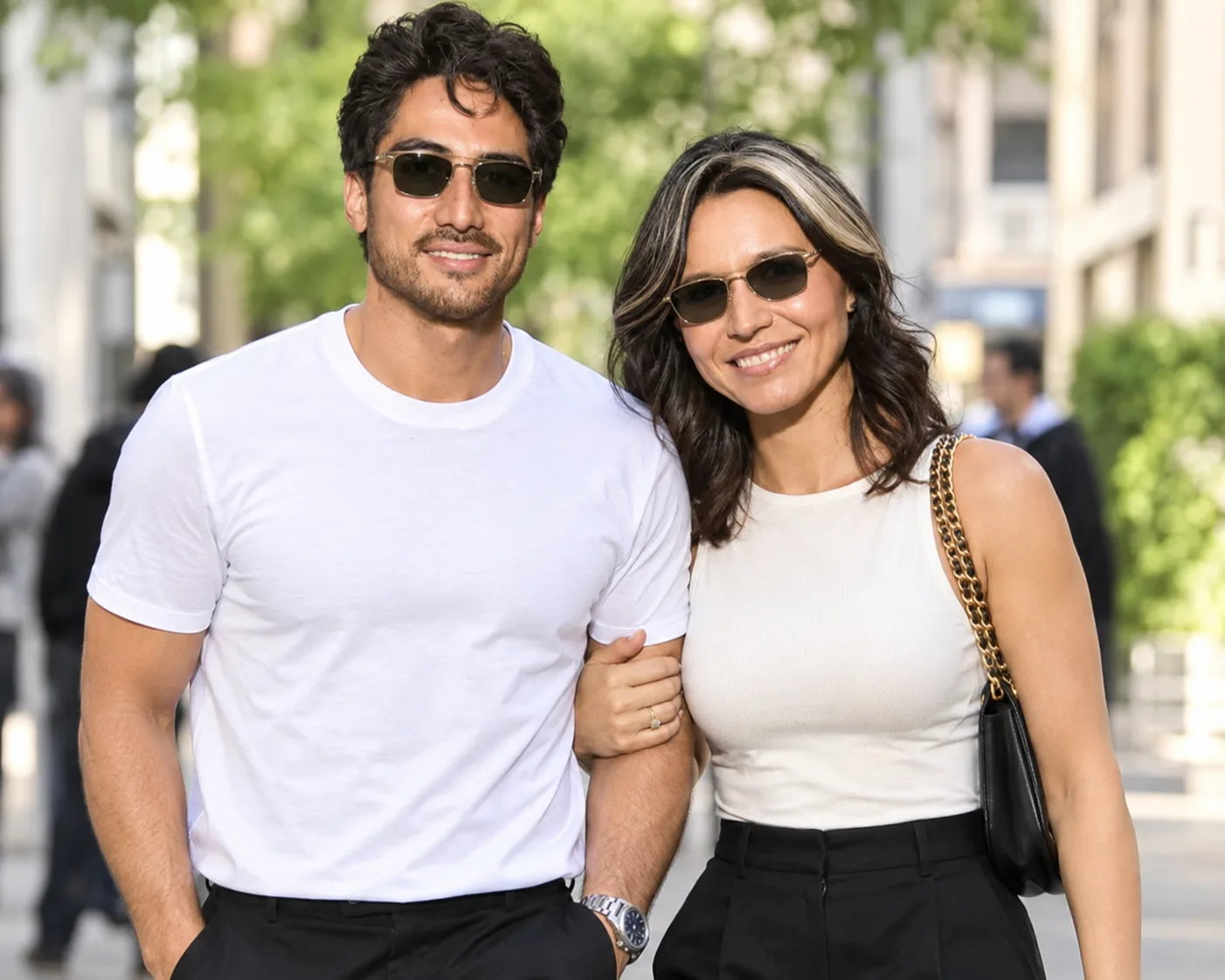
Abraham Williams is a Hawaii-raised cinematographer, Steadicam operator, editor and colourist. Most people know him as the husband of former US National Intelligence Director Tulsi Gabbard. In 2026 his name made headlines when he was diagnosed with sacral chordoma, an extremely rare form of bone cancer. His diagnosis led his wife to resign from one of the most powerful posts in Washington D.C. so she could care for him. This profile covers his roots, his work behind the camera, his marriage and his recovery.
Abraham Williams Biography
| Field | Details |
|---|---|
| Full Name | Abraham Williams |
| Date of Birth | March 30, 1989 |
| Place of Birth | Otahuhu, Auckland, New Zealand |
| Age | 37 years (as of 2026) |
| Nationality | Dual American and New Zealand |
| Zodiac Sign | Aries |
| Ethnicity | Māori, Samoan and European |
| Profession/Occupation | Cinematographer, Steadicam operator, editor, colourist |
| Education | Kalākaua Middle School, Honolulu |
| Genre/Field | Documentaries, short films, features, commercials, music videos |
| Spouse/Partner | Tulsi Gabbard (married April 9, 2015) |
| Parents | Anya Anthony (mother), Timothy S. Anthony (stepfather) |
| Height | 5 ft 10 in (178 cm) |
| Notable Works | 100 Foot Wave (HBO), Shaka: A Story of Aloha, Down on the Sidewalk in Waikiki, Knight Watch |
How Old Is Abraham Williams?
Abraham Williams is 37 years old. He was born on March 30, 1989, so his birthday falls under the Aries sign. He is about eight years younger than his wife, Tulsi Gabbard, who turned 45 in 2026.
The couple rarely make a fuss about the age gap. On his birthdays, Gabbard has posted warm notes about him on social media. In one, she wrote that she would choose him again and again, which says more about their bond than any number does.
His age also matters for his health story. Chordomas usually show up in adults between their 40s and 60s, so a diagnosis in his mid-30s is unusual. The early diagnosis is part of why his case drew so much public attention.
Early Life, Heritage and Background
Williams was born in Otahuhu, a suburb of Auckland in New Zealand. His roots mix Māori, Samoan and European ancestry, which reflects the Pacific heritage shared by many families who later settled in Hawaii.
His family moved to Honolulu, Hawaii, when he was young, and he grew up there. His mother, Anya Anthony, and his stepfather, Timothy S. Anthony, raised him. He holds dual American and New Zealand nationality, so he is tied to both island homes.
He attended Kalākaua Middle School in Honolulu. His stepfather taught English and social studies, and people close to the family say that kind of home encouraged reading and creativity.
Growing up surrounded by Hawaii’s ocean, light and close community helped shape his visual sense. Many island filmmakers say the landscape teaches you to see before you ever pick up a camera, and Williams’ later work leans heavily on natural light and real locations.
Abraham Williams’ Career in Cinematography
Williams built his career behind the camera rather than in front of it. Over more than a decade he has worked as a cinematographer, Steadicam operator, editor and colourist on documentaries, short films, features, commercials and music videos. That range means he understands a production from the first shot to the final grade.
A Self-Taught Passion for the Lens
Williams is largely self-taught. He started with still photography, learning exposure, shutter speed, focal length and composition by trial and error. That grounding in stills gave him a strong sense of framing before he moved into motion.
He grew within Hawaii’s independent film scene, a small community where crews often take on several jobs. Working on low-budget sets taught him practical filmmaking, such as shaping natural light, improvising studio lighting and getting the shot without heavy VFX.
That background shows in his style. He prefers real environments and storytelling depth over flashy effects. For a cinematographer, knowing when not to move the camera matters as much as knowing how to move it.
Life Behind the Steadicam
A Steadicam is a body-mounted stabiliser that lets an operator carry a camera while walking or running, producing smooth tracking shots. Williams has done this demanding job on many productions, including street scenes shot around Waikiki.
The rig is heavy, and operating it through long shoots takes real strength and conditioning. Operators often move across rough terrain, stairs or crowded streets while keeping the frame steady, so balance and core fitness are part of the job.
Physical skill is only half of it. A good operator also needs artistic judgment about when to glide closer, when to hold back and how to keep the audience inside the scene. That is what makes Steadicam work feel immersive rather than mechanical.
Editing and Colour Grading
Williams also works in post-production as an editor and colourist. As an editor, he paces scenes, decides where key moments land and shapes how a story unfolds.
Colour grading is where mood gets locked in. A warm golden grade can make a surf scene feel nostalgic, while a cold, desaturated look adds tension. Williams handles this final correction stage on many productions, often fixing lighting issues left over from the shoot.
Covering the full pipeline from camera to colour is valuable on small productions. Directors get consistent results because the same person who lit a scene also understands how it will look in the final edit.
Notable Film and TV Credits
His credits span Hawaii-made shorts, documentaries and larger projects. Selected titles include:
- 100 Foot Wave (HBO documentary series, additional photography)
- Shaka: A Story of Aloha
- Down on the Sidewalk in Waikiki
- Knight Watch
- The Pit Where We Were Born
- Raphael Dumtaro: Warrior of Love
- Last Taxi Dance
- Anton Chekhov’s The Proposal
- Step Motion Step
- E Malama Pono
- Lark
- Willy Boy
- White Guys: P.I.
Across these projects, he has held several crew roles:
| Crew Role | What It Involves |
|---|---|
| Cinematographer | Leads the camera and lighting look of a project |
| Steadicam Operator | Captures smooth moving shots with a stabilised rig |
| Additional Photographer | Shoots extra footage alongside the main camera team |
| Electrician / Best Boy | Handles lighting setups and power on set |
| Grip | Rigs and moves camera support and lighting equipment |
How Abraham Williams Met and Married Tulsi Gabbard
Williams met Tulsi Gabbard in 2012 during her first congressional campaign for Hawaii’s 2nd district House seat. He worked as a photographer and camera operator on campaign ad shoots and paid close attention to the images and aesthetic details.
After the campaign, they reconnected socially and started spending time together. Both are lifelong surfers, and much of their early relationship revolved around the ocean, hikes and long walks on Oahu.
They dated for about a year and a half before marrying on April 9, 2015. The ceremony took place on Oahu’s windward side near the Kahaluu Fishpond, a setting that fit their love of Hawaii’s land and water.
Gabbard has often described him as a calm, steady presence. By 2026 they had shared eleven years of marriage through her military deployment, several political campaigns and her move to Washington.
Abraham Williams’ Sacral Chordoma Diagnosis
In 2026, Williams was diagnosed with sacral chordoma, an extremely rare cancerous bone tumor. Gabbard shared the news on X and called it a “one in a million type of cancer.”
The diagnosis came after he saw doctors for persistent back pain. Like many chordoma patients, he had no idea a tumor was behind it. Back pain is common, and that is one reason these tumors are often found late.
Gabbard was candid that the coming weeks and months would bring major challenges. Doctors laid out two main paths, either an invasive surgery or radiation, and the couple chose surgery and booked it quickly.
What Is Sacral Chordoma?
A chordoma is a slow-growing bone cancer that forms along the spine. A sacral chordoma develops in the sacrum, the triangular bone at the base of the spine just above the tailbone.
These tumors are rare. Chordomas of all types are diagnosed in only around one in a million people each year. Because they grow slowly, symptoms such as lower back pain, numbness or bladder changes can build gradually and be mistaken for something minor.
Treatment usually centers on surgically removing the tumor along with a margin of surrounding bone and tissue. Radiation can be used instead or afterward, and long-term monitoring is standard because chordomas can return.
Why Tulsi Gabbard Resigned as DNI
Tulsi Gabbard announced her resignation as Director of National Intelligence on May 22, 2026, to care for her husband during his cancer fight. Her departure took effect at the end of June 2026.
In her resignation letter, she called Williams her rock through eleven years of marriage. She noted his support during her deployment to East Africa on a Joint Special Operations mission and through her political campaigns. She wrote that she could not ask him to face the fight alone while she stayed in such a demanding role.
The announcement caused a stir on Capitol Hill, because cabinet-level resignations for family reasons are rare. Principal Deputy Director Aaron Lukas was set to step in as acting director while the White House weighed a permanent replacement.
Trump’s Response
President Trump responded on Truth Social. He praised Gabbard’s work and said she was rightly stepping away to be with her husband.
He also wished Williams a full recovery and said he hoped he would come back better than ever. The message was notably warm compared with the usual tone of administration departures.
For many readers, the moment was a reminder that even top officials face the same family crises as everyone else. The story shifted public attention from intelligence policy to a husband’s health.
Surgery and Recovery Update
Williams’ surgery lasted between seven and eight hours, and Gabbard said it was successful. Surgeons removed the tumor along with cancerous bone and surrounding tissue from the base of his spine.
The first days were hard. Gabbard shared that he had a rough night, was in a lot of pain and was dealing with side effects from the anesthesia drugs, including vomiting. Narcotic pain medication helped manage the post-op pain while nurses and his medical team watched him closely.
He was soon back home, taking slow steps with support. Gabbard said he was progressing very well, sometimes pushing himself too hard in his eagerness to walk again.
Recovery from sacral surgery is long. It involves rigorous physical therapy to rebuild strength and mobility, and frequent MRIs to watch for any recurrence. As Gabbard put it, the battle isn’t over yet, but the couple see the successful surgery as a strong first step.
A Look at Tulsi Gabbard’s Career
Tulsi Gabbard is an American politician and US military officer. She represented Hawaii’s 2nd congressional district from 2013 to 2021 and serves as a lieutenant colonel in the Army Reserve.
She was sworn in as US National Intelligence Director in February 2025 at the White House, with Williams by her side. Her tenure focused on reshaping the ODNI.
Under her “ODNI 2.0” initiative, the office cut its staff by about 40%, consolidated offices and reassigned or removed what she called unnecessary staff. Officials said the streamlining saved more than $700 million a year. Critics argued the cuts weakened the agency’s analytic capacity.
She also oversaw the release of large batches of declassified records, including roughly half a million pages of JFK assassination material. Those moves earned praise from transparency advocates and pushback from some intelligence veterans.
Balancing Art and Public Life
Despite being married to a high-profile politician, Williams has kept a low profile. He rarely gives interviews or comments on politics, and he lets his wife handle the public side of their life.
His camera skills have still played a quiet role in her career. He helped shoot campaign ads and promotional videos, including material for her 2020 presidential campaign.
That balance is not easy. Media attention follows political spouses everywhere, but Williams has stayed focused on his craft and kept politics separate from his artistic work.
Life Outside Work: Surfing, Travel and Texas
Surfing is Williams’ biggest passion outside film. He is an avid surfer, and time in the water with his wife remains one of their favourite ways to spend a day.
The couple also enjoy travel and the outdoors. Over the years they have shared trips to places such as London and Mexico, and Williams is known as an animal lover.
Property records show the couple also own a home in Leander, Texas, giving them a base on the mainland beyond Hawaii and Washington D.C.
FAQs
Is Abraham Williams in the military?
No, Abraham Williams has not served in the military. His wife, Tulsi Gabbard, is the one with military service. She is a lieutenant colonel in the US Army Reserve and was deployed overseas.
Is Abraham Williams cancer free?
His surgery successfully removed the tumor, and he is recovering at home. Doctors have not publicly declared him cancer free, and he will need regular MRI scans because sacral chordoma can return.
Where is Abraham Williams from?
He was born in Otahuhu, Auckland, New Zealand, and raised in Honolulu, Hawaii. He holds dual American and New Zealand nationality and has Māori, Samoan and European roots.
What does a Steadicam operator do?
A Steadicam operator wears a body-mounted stabiliser to capture smooth, fluid shots while moving. The job takes physical strength, balance and a strong sense of framing to keep scenes steady and immersive.
How long have Abraham Williams and Tulsi Gabbard been married?
They married on April 9, 2015, so they marked eleven years of marriage in 2026. They met during her 2012 congressional campaign and dated for about a year and a half first.
Who replaced Tulsi Gabbard as DNI?
After her departure at the end of June 2026, Principal Deputy Director Aaron Lukas was in line to serve as acting director until a permanent nominee was confirmed by the Senate.
Read About : misa hylton